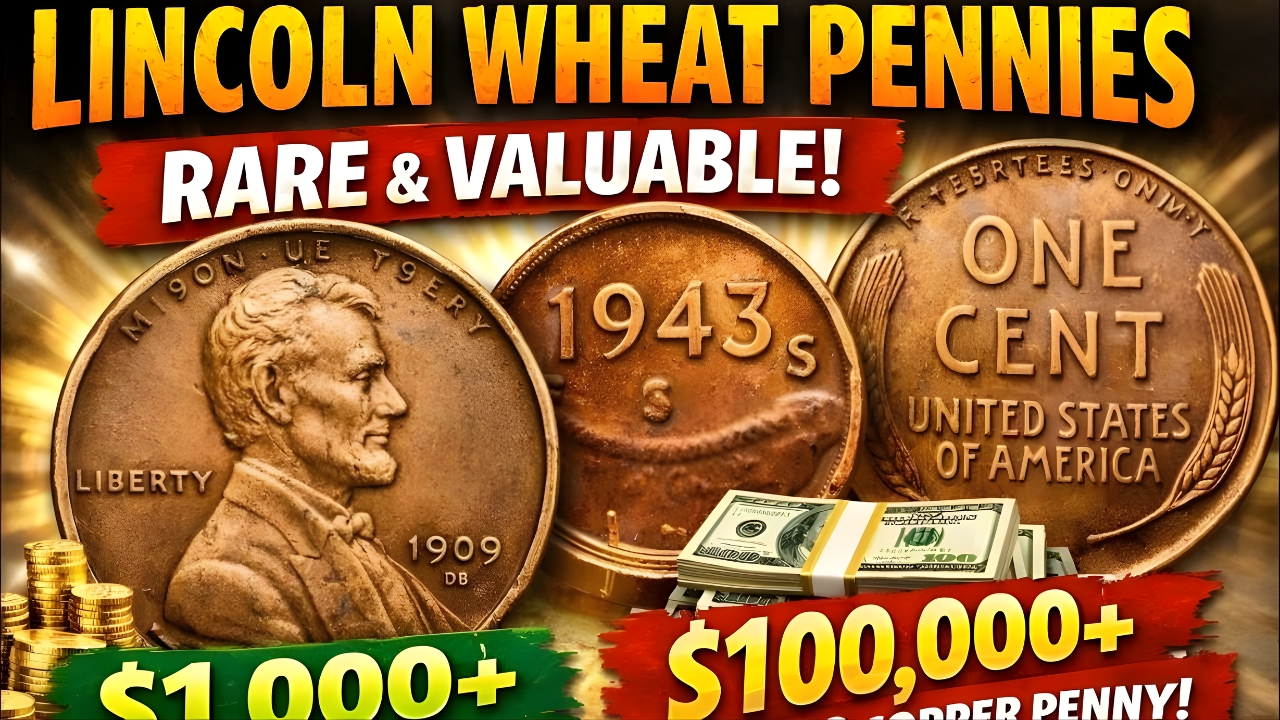
The Lincoln Wheat Penny remains one of the most iconic and sought-after coins in the United States. First introduced in 1909, this penny features the familiar image of Abraham Lincoln on the obverse and wheat stalks on the reverse.
Over the decades, collectors have been captivated not only by its historical significance but also by its potential value, especially for rare errors and key dates. As we move into 2026, understanding which Wheat Pennies are most valuable, and why, has become essential for collectors, investors, and hobbyists alike.
The Enduring Appeal of Lincoln Wheat Pennies
Lincoln Wheat Pennies hold a unique place in numismatics due to their combination of history, design, and collectibility. They were the first coins to feature a real person, Abraham Lincoln, which marked a departure from the traditional symbolic figures that dominated coinage. This human connection, along with the simplicity and charm of the wheat reverse design, has helped maintain collector interest for over a century.
Collectors are often drawn to Wheat Pennies for several reasons. First, they are relatively affordable for common dates, making them accessible for beginners. Second, rare dates, mint marks, and error coins can command thousands or even hundreds of thousands of dollars, creating opportunities for significant returns. Finally, each coin tells a story of its time, reflecting economic conditions, minting technology, and even political messaging.
Key Dates to Watch in 2026
When evaluating Wheat Penny values in 2026, certain key dates remain at the top of collectors’ wish lists. These coins are particularly rare due to low mintage numbers, unique production conditions, or historical significance.
1909-S VDB: This coin is among the most famous Wheat Pennies. Struck in San Francisco in the first year of issue, it includes the designer Victor David Brenner’s initials on the reverse. Its limited mintage and historical importance make it highly prized.

1914-D: Minted in Denver, this penny had a low production number, and most surviving examples show signs of heavy circulation. High-grade specimens are extremely rare and valuable. 1922 No D: A mint error from the Denver facility, the absence of the “D” mint mark on this coin makes it one of the most collectible Wheat Pennies.
1931-S: Another San Francisco issue with a limited run, this coin is sought after by collectors completing date-and-mint sets.
1943 Bronze: During World War II, pennies were minted in steel to conserve copper. A few bronze planchets from previous years were mistakenly struck, creating one of the rarest Wheat Penny errors.
Understanding Rare Errors
Errors can dramatically affect the value of a Wheat Penny. Coin errors occur when the minting process deviates from normal production, producing coins that are visually or materially unusual. Collectors prize these anomalies because they are scarce and often impossible to replicate.
Some of the most common and valuable error types include:
Doubled Die: This occurs when the die used to strike the coin produces a doubled image or inscription. The effect is often most visible on the date and lettering.
Off-Center Strikes: Coins struck off-center display part of the design missing or misaligned. The more pronounced the misalignment, the higher the potential value.
Wrong Planchet or Metal Composition: A coin struck on an incorrect metal blank, such as a copper penny struck on a steel planchet, can be extremely rare.
Repunched Mint Marks: Coins where the mint mark has been struck multiple times in slightly different positions are sought after by collectors who specialize in minting anomalies.
Identifying rare errors requires careful examination. Magnification, proper lighting, and reference guides are essential tools. Some collectors also turn to professional grading services to confirm authenticity and enhance the coin’s marketability.
Factors Affecting 2026 Wheat Penny Values
Several key factors influence the value of Wheat Pennies in 2026:
Condition and Grading: Coins in uncirculated or near-perfect condition are far more valuable than heavily worn examples. Professional grading provides assurance of authenticity and condition, often boosting value.
Rarity: Coins with low mintage numbers, limited distribution, or unique production features command higher prices.
Historical Significance: Coins from pivotal years, such as the first year of issue or wartime productions, are more collectible.

Market Demand: Trends in collector interest can fluctuate. Coins that are currently popular among collectors may see temporary price surges.
Tips for Collectors in 2026
For both new and experienced collectors, navigating the Wheat Penny market in 2026 requires knowledge, patience, and attention to detail.
Examine Every Coin Carefully: Check dates, mint marks, and overall condition. Look for unusual features or signs of error production.
Use Professional Tools: Magnifying glasses, coin scales, and reference guides help identify key details.
Seek Authentication When Needed: High-value coins should be certified by a recognized grading service to ensure their authenticity.
Understand Market Trends: Observing recent auction results and collector forums can provide insight into demand and potential value.
Preserve Properly: Store coins in protective holders, away from humidity, sunlight, and contaminants to maintain condition.
Collecting Strategies
Collectors often adopt different strategies depending on their goals. Some focus on completing a full date-and-mint set, seeking coins from every year and mint. Others target key dates or error coins with the potential for high investment returns. Some collectors pursue coins with historical or aesthetic appeal, prioritizing beauty and uniqueness over pure market value.
Combining these strategies can help create a balanced collection. For example, a core set of common dates can be supplemented with rare errors or key dates, providing both educational and investment value.
The Role of Technology in 2026
Digital resources are increasingly important in 2026. Online databases, auction records, and collector forums allow enthusiasts to track trends, compare prices, and share discoveries. Technology also aids in coin authentication, with high-resolution imaging and digital grading tools helping collectors make informed decisions.
Even experienced collectors rely on online platforms to stay updated on the market, identify rare finds, and learn about new error varieties as they emerge.
Future Outlook for Wheat Penny Values
The long-term outlook for Wheat Pennies remains positive. While not all coins will see dramatic appreciation, rare dates and error coins continue to attract attention and value. Historical significance, combined with steady collector interest, ensures that Wheat Pennies will remain an important part of the numismatic market for years to come.
Collectors in 2026 can expect gradual growth in key segments, particularly for coins with exceptional condition or rarity. By focusing on quality and knowledge, collectors can make informed choices and build collections with lasting value.
Final Verdict
The 2026 Lincoln Wheat Penny market continues to offer exciting opportunities for collectors of all levels. Rare errors, key dates, and high-grade specimens remain the most valuable and sought-after pieces. Understanding the factors that affect value, using proper tools, and staying informed about trends are essential for anyone looking to buy, sell, or preserve Wheat Pennies.
For collectors willing to invest time and attention, Wheat Pennies provide not only historical insight but also the potential for long-term appreciation.
Disclaimer
This article is for informational purposes only. Coin values fluctuate based on condition, rarity, market demand, and professional grading. Prices mentioned are based on recent sales and market observations but are not guaranteed. Collectors should seek expert guidance before buying, selling, or investing in collectible coins.