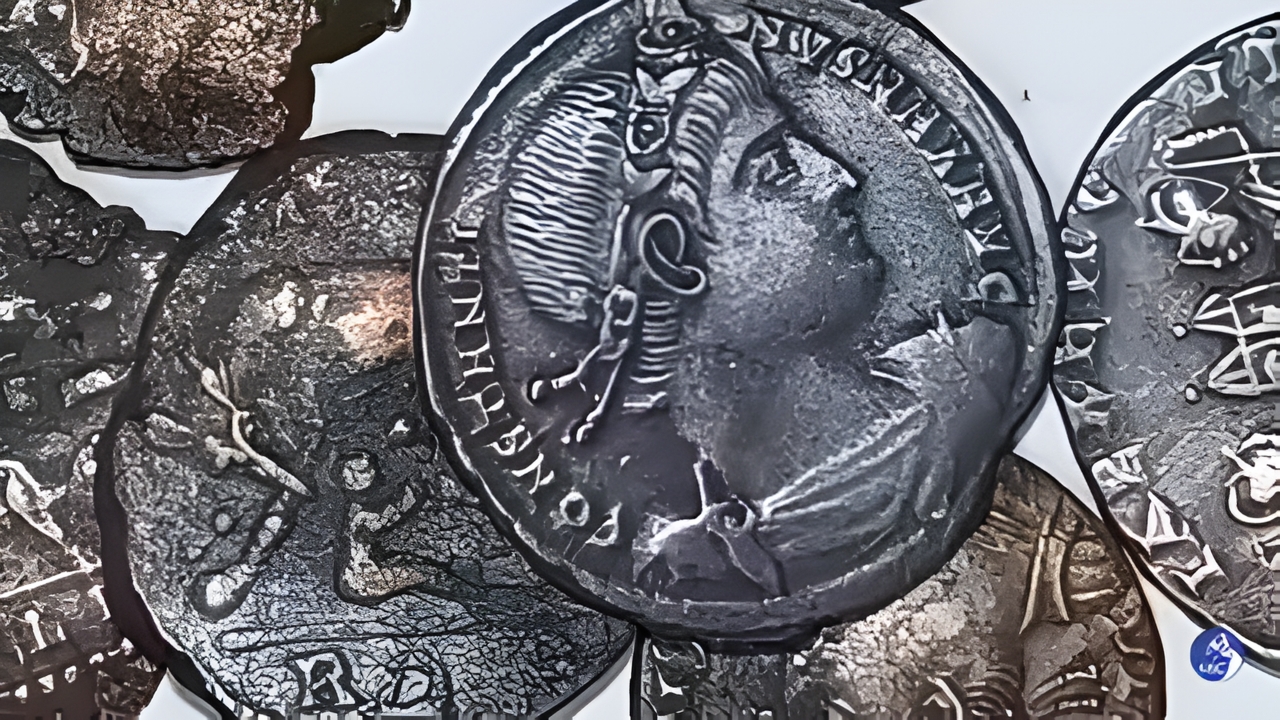
Archaeologists have made one of the most remarkable discoveries in recent years: a massive hoard of 50,000 ancient Roman coins off the coast of Sardinia, near the town of Arzachena. This unprecedented find, dating to the late Roman period, sheds light on the economic, social, and political landscape of the Roman Empire during its later centuries. Such discoveries are rare, and the scale of this hoard makes it the largest known collection of late Roman coins ever recovered in this region.
Discovery and Excavation
The hoard was discovered during an underwater archaeological survey conducted along the northern coast of Sardinia. Researchers initially noticed unusual metal objects scattered along the seabed, prompting a detailed investigation. Using specialized diving equipment and underwater excavation techniques, the team began recovering the coins while documenting their precise locations.
The site required careful handling to preserve both the coins and the surrounding context. Unlike land-based finds, underwater discoveries are particularly delicate due to corrosion, shifting sands, and water currents. Archaeologists worked meticulously to ensure that each coin was recovered intact, along with any associated artifacts that could provide historical context.
Description of the Hoard
The hoard consists of approximately 50,000 bronze and silver coins, most of which date to the late Roman Empire, roughly between the 3rd and 5th centuries CE. The coins feature the familiar images of emperors, deities, and Roman symbols, offering insight into the iconography and propaganda of the period. Many of the coins are remarkably well-preserved, thanks in part to the protective conditions of the seabed.
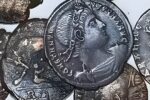
The collection includes coins minted across different regions of the Roman Empire, indicating that Sardinia played a significant role in trade and commerce. Some coins bear markings of less common mints, which could suggest that merchants or military officials transported them via maritime routes. The presence of these diverse coins highlights the interconnectedness of the Roman economy during its late stages.
Historical Significance
The discovery of this hoard is historically significant for several reasons. First, it provides concrete evidence of the volume of currency circulating in the Mediterranean during the late Roman Empire. While textual sources give some insight into Roman finances, physical evidence like this allows historians to better understand economic practices, inflation, and trade networks.

Second, the hoard may reflect patterns of wealth accumulation and storage. Large coin hoards were often hidden in times of political instability or military threats. Sardinia’s coastal location made it a strategic point for maritime trade, and it is possible that the coins were buried intentionally to safeguard wealth during turbulent times.
Third, the variety of coins offers valuable data on minting practices and artistic trends. By studying the inscriptions, portraits, and symbols, researchers can identify chronological patterns, regional styles, and subtle shifts in imperial messaging. Such information helps historians reconstruct the administrative and cultural priorities of late Roman authorities.

Archaeological Methods Used
Recovering such a large underwater hoard required advanced techniques. The team employed sonar mapping to determine the full extent of the coin spread and to identify any buried clusters. Divers carefully excavated the seabed, brushing away sediments to reveal coins while recording their positions for contextual analysis.
Conservation efforts began immediately upon recovery. Exposure to air and saltwater can accelerate corrosion, so the coins were placed in controlled environments to stabilize their surfaces. Experts will continue cleaning, cataloging, and studying the hoard in detail over the coming years.
Economic Insights from the Hoard
Preliminary analysis of the hoard suggests a fascinating picture of late Roman economics. The presence of both bronze and silver coins indicates multiple tiers of currency in circulation, reflecting everyday transactions alongside larger commercial exchanges. Some coins show signs of wear, suggesting they were used extensively, while others appear nearly new, possibly representing savings or tribute.
The hoard may also shed light on the inflation and monetary debasement that characterized the late Empire. During this period, the silver content of coins was often reduced, affecting their intrinsic value. By examining the metal composition, weight, and mint marks, researchers can track changes in Roman monetary policy and its effects on regional economies.

Trade and Maritime Connections
Sardinia was a crucial hub in Mediterranean trade networks. The diversity of coin origins in the hoard supports the notion that the island was a center for maritime commerce. Traders, merchants, and military fleets likely transported currency between ports, and coins may have circulated far from their minting locations before ending up buried near Arzachena.
The hoard’s location near the coast suggests that maritime risks, such as piracy or shipwrecks, could have influenced the decision to conceal wealth. Such practices were common in antiquity, particularly during periods of instability when land-based storage was less secure.

Cultural and Artistic Value
Beyond economic insights, the hoard has considerable cultural and artistic value. Coins serve as miniature works of art, reflecting imperial propaganda, religious beliefs, and societal values. The depictions of emperors, deities, and symbols provide clues to the messages the Roman authorities wished to convey, both to their citizens and to distant provinces.
Detailed study of the iconography may also reveal regional variations in artistic style, helping historians understand how local workshops interpreted imperial designs. These subtle differences contribute to our knowledge of Roman artistic trends and cultural expression during the late Empire.
Preservation and Future Study
The long-term study of this hoard will involve cataloging each coin, analyzing metal composition, and examining mint marks and inscriptions. Digital records, photographs, and databases will allow researchers worldwide to access detailed information about the find.
Conservation will remain a priority, ensuring that the coins can be studied without further deterioration. The project may also inspire future underwater surveys in the region, as it demonstrates the potential for significant archaeological discoveries off Sardinia’s coast.

Broader Implications
This discovery highlights the importance of maritime archaeology in uncovering historical treasures. It also emphasizes the role of Sardinia within the broader context of the Roman Empire. The hoard confirms that the island was not merely a peripheral location but an active participant in Mediterranean trade and monetary circulation.
The find may also influence our understanding of late Roman society. By examining the ways wealth was stored and transported, historians can reconstruct patterns of economic behavior, security concerns, and responses to political uncertainty.

Final Verdict
The discovery of 50,000 ancient Roman coins near Arzachena, Sardinia, represents a landmark in numismatic and archaeological research. The hoard offers unparalleled insight into the late Roman economy, trade networks, minting practices, and artistic trends.
For historians, collectors, and enthusiasts, it is a rare opportunity to study a vast collection of coins in context, providing new perspectives on the Empire’s final centuries. This hoard underscores the potential of underwater archaeology to uncover treasures that dramatically enhance our understanding of history.
Disclaimer
This article is intended for informational purposes only. Historical interpretations and assessments of the hoard are based on preliminary findings and may evolve as further research is conducted. The value, authenticity, and significance of the coins are subject to professional evaluation and ongoing study by archaeologists and numismatists.