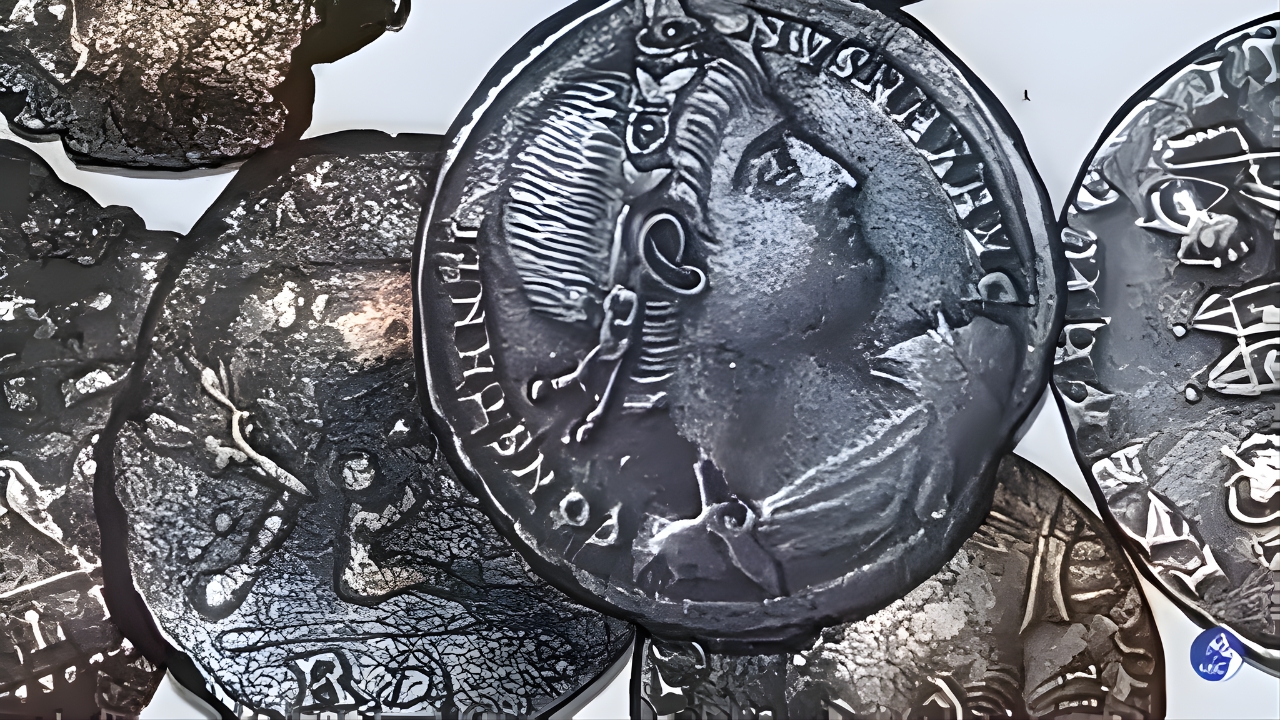
Archaeologists in Sardinia have recently uncovered one of the most remarkable Roman treasures in decades: a hoard of approximately 50,000 ancient Roman coins near the town of Arzachena. This extraordinary discovery has captured the attention of historians, numismatists, and the public alike. The coins, many of which date back to the height of the Roman Empire, provide a unique glimpse into the economic, cultural, and political life of ancient Rome. The sheer volume of the find, combined with its excellent state of preservation, has made it one of the most significant numismatic discoveries in modern times.
This discovery not only offers valuable insights into ancient monetary circulation but also underscores Sardinia’s historical importance as a center of trade and Roman influence. As experts examine the coins, the find is expected to reshape our understanding of local history and Roman economic networks.
The Discovery Near Arzachena
The hoard was discovered near Arzachena, a town located in northern Sardinia known for its rich archaeological heritage. The area has been the site of numerous ancient settlements, nuraghi, and Roman structures, indicating that it was a thriving region during antiquity. The coins were unearthed during a controlled excavation led by a team of local archaeologists working in collaboration with the Sardinian regional heritage authorities.
Initial reports suggest that the coins were buried in multiple containers, likely ceramic amphorae or storage vessels, which have helped preserve them in remarkable condition. The placement of the hoard suggests it may have been intentionally hidden, possibly during a period of political or military unrest, to protect the wealth from theft or confiscation.

Historical Context of Roman Coin Hoards
Roman coin hoards are not uncommon in the archaeological record, but the size and scale of this find make it exceptional. Hoards were typically buried for safekeeping during times of instability, such as invasions, rebellions, or periods of rapid economic change. They also provide evidence of wealth accumulation, trade practices, and the circulation of currency across different regions of the empire.
The coins themselves often bear images of emperors, deities, and symbols of Roman authority, offering valuable insights into political propaganda, artistic trends, and religious practices of the era. Hoards like the one found near Arzachena serve as time capsules, preserving a snapshot of daily life, commerce, and social structures within the Roman world.

Details of the Coinage
Preliminary examinations of the Sardinian hoard indicate that the coins span several centuries of Roman history. Many appear to be silver denarii and bronze sestertii, with some rare examples possibly minted during the reigns of emperors such as Augustus, Trajan, and Hadrian. The variety of denominations suggests that the hoard represented both everyday transactional currency and higher-value reserves, which may have been accumulated by a wealthy individual or institution.
Inscriptions and imagery on the coins provide additional historical data. Some coins display portraits of emperors with titles and honorifics, while others depict mythological scenes, military victories, and symbolic representations of Rome’s power. Numismatists are particularly interested in any unusual mint marks, rare varieties, or errors that could increase the historical and monetary value of the collection.
Preservation and Condition
One of the most striking aspects of the find is the condition of the coins. Many are remarkably well-preserved, with sharp details and minimal corrosion. The burial environment, likely dry and protected from excessive moisture, contributed to the survival of fine details, allowing experts to study inscriptions, facial features, and symbols in great clarity.
Conservation efforts will be crucial in ensuring the long-term stability of the coins. Archaeologists and conservators plan to carefully clean, catalog, and stabilize each coin using modern techniques to prevent deterioration while maintaining historical authenticity. Proper preservation will allow for detailed analysis and display in museums, making the collection accessible to scholars and the public.

Insights Into Roman Economy and Trade
The hoard provides valuable evidence of Roman economic practices in Sardinia. Sardinia was an important province for grain production, mining, and trade, and the coins likely reflect both local economic activity and connections with other parts of the Roman Empire. The diversity of coin types and mints represented in the hoard suggests that the region was integrated into broader trade networks, receiving currency from distant imperial centers.
The hoard may also shed light on wealth accumulation patterns, as large deposits of coins were often associated with elite households, religious institutions, or commercial enterprises. By analyzing the coins’ composition, weight, and origins, historians can gain a deeper understanding of economic conditions, inflation, and monetary policies during different periods of Roman rule.
Possible Reasons for Burial
Experts believe the coins were intentionally buried rather than lost accidentally. The meticulous arrangement in containers indicates deliberate concealment, likely as a safeguard against theft or during a time of social or political unrest. In Roman times, it was common for individuals to hide wealth during periods of conflict, rebellion, or invasion, with the hope of retrieving it later.
The reasons for the hoard remaining buried for centuries remain a subject of speculation. It may have been forgotten due to the death or displacement of its owner, or political upheaval may have prevented its recovery. Regardless, its survival offers a unique opportunity to study ancient Roman life and wealth preservation strategies.

Archaeological and Numismatic Significance
The hoard is significant both archaeologically and numismatically. From an archaeological perspective, it adds to our understanding of settlement patterns, economic life, and Roman influence in Sardinia. From a numismatic standpoint, it provides a vast dataset for studying coinage, minting practices, and circulation patterns across time and space.
Scholars are particularly excited about the potential discovery of rare coins or minting anomalies, which could further elevate the importance of the hoard. Comparisons with other known hoards may help researchers identify patterns in coin production, distribution, and storage practices across the Roman Empire.
The Role of Sardinia in Roman History
Sardinia has a rich and complex history that spans prehistoric nuraghi civilizations, Phoenician settlements, Carthaginian influence, and Roman conquest. The discovery of this coin hoard reinforces the island’s significance as a center of commerce and Roman administration. Coins like these illustrate the extent of Roman integration and the island’s role within imperial trade networks.
Understanding the hoard in the context of Sardinia’s broader historical narrative allows historians to reconstruct patterns of wealth, governance, and cultural exchange during Roman times. This contributes to a more complete picture of life in a strategically important province of the empire.

Future Research and Public Access
The hoard will undergo extensive cataloging and analysis over the coming months. Researchers will document each coin’s type, mint, date, and condition, creating a comprehensive record for study. High-resolution imaging, chemical analysis, and digital modeling may also be employed to preserve information and facilitate research without damaging the coins.
Plans are likely underway to display a selection of the hoard in local or national museums, allowing the public to appreciate this remarkable find. Educational programs and exhibitions will provide context about Roman history, Sardinia’s cultural heritage, and the significance of coin hoards in understanding the past.

Implications for Collectors and Historians
For collectors, the discovery of 50,000 coins near Arzachena emphasizes the enduring allure of ancient Roman coinage. While the hoard will likely remain in the hands of public institutions, it may inspire further searches and research into other potential hoards across the Mediterranean.
For historians, the coins provide tangible evidence of Roman economic practices, wealth distribution, and provincial life. They highlight the importance of Sardinia as a commercial hub and deepen our understanding of the empire’s reach, trade networks, and monetary systems.
Final Verdict
The discovery of 50,000 ancient Roman coins near Arzachena, Sardinia, represents a landmark moment in archaeology and numismatics. The hoard’s size, diversity, and preservation make it an invaluable resource for historians, scholars, and the public.
Beyond its monetary value, the find offers a window into the economic, political, and cultural life of the Roman Empire, underscoring Sardinia’s significance in antiquity. This extraordinary collection promises to inform research, education, and appreciation of Roman history for years to come.
Disclaimer
This article is intended for informational purposes only. The valuation, historical interpretation, and significance of archaeological discoveries may evolve as research progresses. Readers are encouraged to refer to professional archaeological reports and consult experts for accurate and updated information regarding ancient Roman coin finds.